Seguridad marítima

Davits.- Unmanned Systems

Modern warships and coastguard cutters need to be flexible. They have to be able to handle multiple types of boats, weapons and

containers through one mission bay and on both sides of the vessel.

Vestdavit works with integrators and hangar specialists to provide total multi-role capability.

Enhancing capability

Raiding boats, RIBs, AUV sonar systems, USVs, rescue craft – a modern warship or coastguard cutter has to deploy and recover all of these to cover multiple roles. But handling boats is no longer enough. A truly multi-role mission bay deploys the same lifting and carriage systems to load, discharge and move internally a wide range of weapons, ammunition and containers. Vestdavit can configure systems, MissionEase which can lift a wide range of boats and equipment and which are dimensioned to handle standard 20ft teu containers.

Integration
A truly

Seguir leyendo

Shipping emissions – putting things in context


Once again the IMO has attracted the ire of environmental NGOs. This time over its decision of MEPC 75 to opt for an emissions reduction scheme that has the support of the leading shipping bodies rather than other proposals submitted by a number of member states that the NGOs say are in line with their thinking.

The proposals relate to new efficiency demands for existing vessels built prior to the coming into force of the EEDI which previously were exempt from any CO2 reducing requirement. At a time when it has been difficult to operate many vessels profitably due to market condition and the additional costs incurred meeting requirements for ballast water treatment and adaptation to the 2020 sulphur

Seguir leyendo

The Shipping Industry Transformed 100 Years Ago. It Can Do it Again


Bloomberg

The story of how the shipping industry ditched coal for diesel a century ago shows it could go green fast

16 de noviembre de 2020 12:56 CET
 

The shipping industry could be responsible for about 10% of global greenhouse gas emissions by 2050.


Photographer: Joe Raedle/Getty Images


When the diesel-powered MS Selandia set sail on her maiden voyage in February 1912, people were so astonished by the sight of an ocean liner that didn’t spew steam they named it the “phantom ship.”


With that first trip from Copenhagen to Bangkok, the ship proved a largely untested technology was cheaper, cleaner and more efficient than coal, to the point that

Seguir leyendo

VIKING inaugurates new testing facility for marine firefighting foam in focus on ship safety


Denmark-based VIKING Life-Saving Equipment is driving more investment into its marine fire service business. The inauguration of VIKING’s Foam Lab Odense, which specialises in the testing of a vessel’s reserves of firefighting foam, intensifies the company’s focus on marine fire service, a segment earmarked for significant growth in the coming years.

“Our ambition is to cover all aspects of marine firefighting equipment, and our new state-of-the-art laboratory puts us on the global map in this segment, too. Our class approvals comply with IMO regulations for testing all foam types, and we expect to receive DANAK accreditation in the course of 2021 as the ultimate stamp of approval for our work,” said Anders Nørgaard Lauridsen,

Seguir leyendo

Ecologistas en Acción. Denuncias en Algeciras.


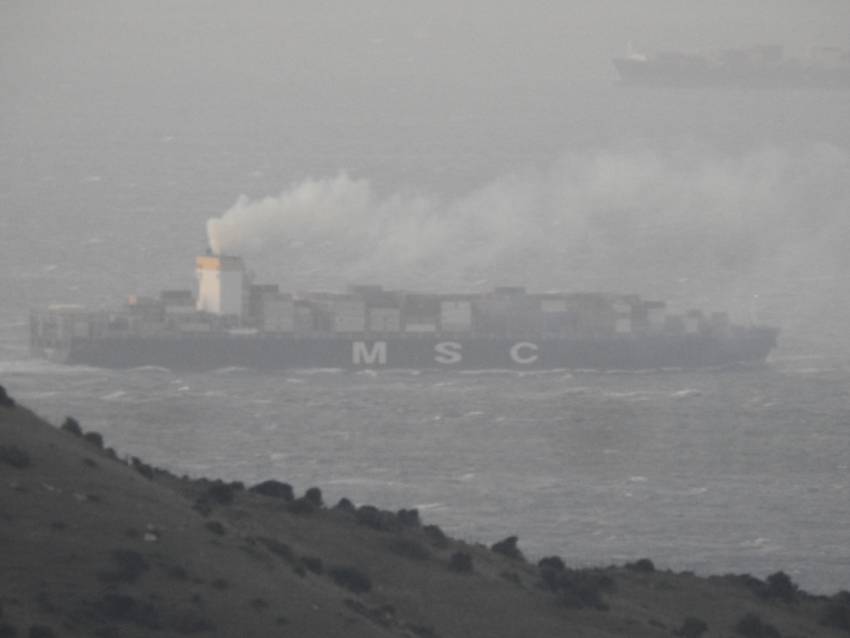
Verdemar Ecologistas en Acción vuelve a denunciar el poco control que existe por parte de Capitanía Marítima en el Estrecho de Gibraltar para medir y controlar las emisiones atmosféricas contaminantes en los buques

By Prensa Prensa Verdemar Ecologistas en Acción  
Noviembre 21, 2020  195


Para Verdemar Ecologistas en Acción éstos superan esas emisiones incumpliendo el Convenio de Marpol que las regula

CAMPO DE GIBRALTAR.- Desde el 1 de enero de 2020, el límite de contenido de azufre en el combustible usado a bordo de los buques que operen fuera de las zonas de control de emisiones designadas es de 0.50 % masa/masa. De esta forma, se reduciría significativamente la cantidad de óxidos de azufre que emanan de los ferrys y buques lo que debería tener grandes beneficios tanto

Seguir leyendo

Subcategories